Allergic Rhinitis in Guadalajara

Breathe freely again and recover your night's rest

Dr. Karla Sanz, Otolaryngologist and Sleep Medicine specialist, diagnoses and treats allergic rhinitis in children and adults, combining medical control and allergy shots with minimally invasive procedures to shrink your turbinates.

Ced. Prof. 9397120 Ced. Esp. 12326536 Certificación CONACEM SAL-3216/21
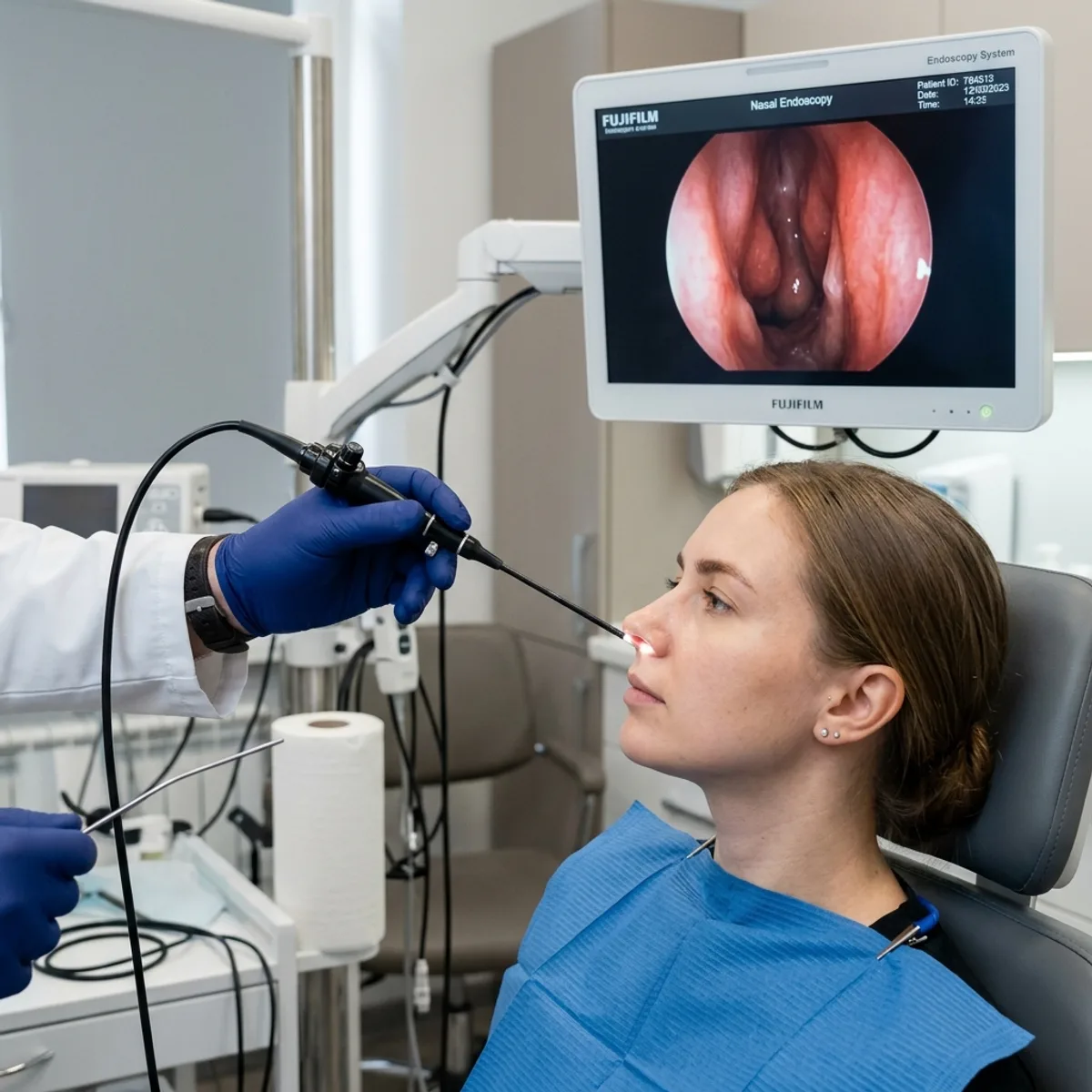
Nasal endoscopy and allergic rhinitis evaluation - Dr. Karla Sanz

What are your primary symptoms?

Allergic rhinitis presents with a combination of symptoms that affect your breathing and daily energy:

Constant runny nose and drip

Clear, watery nasal discharge (hyaline rhinorrhea) that flows continuously, irritating the nose and upper lip.

Bilateral nasal congestion

Feeling of a stuffy nose that blocks airflow on both sides, worsening when lying down and forcing mouth breathing.

Sneezing fits

Episodes of repeated, consecutive sneezes, especially upon waking or when coming into contact with dust, cold, or pollen.

Itchy nose and watery eyes

Intense itching in the palate, throat, and nose (allergic salute), accompanied by tearing and eye redness.

Dr. Karla Sanz, otolaryngologist and sleep specialist in Guadalajara

A comprehensive approach for allergic mucosa and physical obstruction

Allergic rhinitis is an inflammatory response of the nasal mucosa mediated by IgE antibodies upon exposure to common allergens such as dust mites, pollen, mold, or pet dander. It is not just a passing inconvenience; its chronic inflammatory impact significantly reduces the energy and daily productivity of those who suffer from it.

The sleep and development connection: Allergic nasal congestion worsens significantly when lying down due to gravitational blood flow. This forces mouth breathing, which collapses throat tissues, causing chronic snoring and sleep apnea. In children, chronic mouth breathing can alter facial bone development (allergic or adenoid facies) and cause fatigue or attention problems in school. Dr. Karla Sanz's subspecialty in Sleep Medicine allows her to address these issues comprehensively to restore a truly restful sleep.

In our Guadalajara consultation, we perform a detailed evaluation including nasal endoscopy to assess the size of your turbinates and rule out septal deviations or nasal polyps, structuring an ethical and tiered therapeutic plan.
Protocolos Médicos

How much does it cost to treat allergic rhinitis in Guadalajara?

Transparent cost structure for your diagnosis and nasal control

Consulta de Valoración Especializada

Evaluación clínica integral de oído, nariz, garganta y vía respiratoria superior. Incluye tu historia clínica detallada, examen físico y la orientación del plan terapéutico inicial.

50-60 min
Consultorio presencial
Costo de Valoración

$1,000 MXN

Reservar Espacio

A specialized allergic rhinitis evaluation consultation in Guadalajara costs $1,000 MXN (available at Justo Sierra or Ángeles Andares). It includes a detailed medical history, rhinoscopy/physical examination of the turbinates, and the prescription of the initial medical treatment.

In-office Nasofibroscopy: If the specialist needs to perform a thin fiber-optic nasal endoscopy to evaluate deep obstructions in detail, it is performed during the visit (Approximate additional cost: $1,500 MXN).

Allergy Testing and Immunotherapy: Skin prick tests to identify allergens and the preparation of customized allergy shots are coordinated with certified laboratories and immunologists in Guadalajara. Allergy shots range from $1,200 to $2,200 MXN per month on average, depending on your case.

Turbinate Radiofrequency Procedure: In cases of severe hypertrophy that does not respond to sprays, radiofrequency reduction is performed as an outpatient procedure. Fees and medical supplies range from $18,000 to $28,000 MXN depending on the selected clinic or hospital.

Aviso de Consulta Presencial: El canal de WhatsApp es de carácter estrictamente administrativo para agendar y cotizar. Por ética médica y normatividad legal, no se realizan diagnósticos ni se prescriben tratamientos a distancia.

Steps of your allergic rhinitis evaluation consultation

1

Comprehensive Medical History

We analyze the timing of your flare-ups (seasonal or persistent), their impact on your sleep, and your family history of allergies.

2

In-Office Nasal Endoscopy

Exploration of the nasal cavity with a thin fiber optic instrument to directly evaluate the size of the turbinates, the septum, and rule out nasal polyps.

3

IgE Sensitization Protocol

We coordinate skin prick tests or blood allergy tests to identify your exact triggers if your case requires it.

4

Tiered Plan Design

We prescribe appropriate medical treatment (safe local nasal steroids, modern antihistamines) and initiate immunotherapy or radiofrequency depending on your case.

Treatments and options for nasal allergy control

Allergy Shots (Immunotherapy)

The only treatment backed by scientific evidence and international guidelines (such as ARIA and EAACI) capable of modifying the disease course. By gradually acclimating your body to the allergen, they reduce the allergic response, decrease nasal medication use, and prevent rhinitis from progressing to bronchial asthma.

Radiofrequency Turbinate Reduction

A minimally invasive outpatient procedure that immediately reduces the size of hypertrophic turbinates. Performed under local anesthesia in the office or operating room, requires no uncomfortable nasal packing, and offers a fast recovery.

Commercial Nasal Spray Detox

Specific medical protocol guided by Dr. Karla Sanz to reverse damage to the nasal mucosa (rhinitis medicamentosa) and eliminate physical dependence and rebound congestion caused by long-term abuse of decongestants like oxymetazoline.

Environmental Control & Nasal Rinses

Design of a customized plan for controlling allergens at home (mites, pets, humidity) combined with frequent saline nasal washes to clear the mucosa of allergens and inflammatory mediators.

The care process for your respiratory well-being

1

Schedule Consultation

Request your appointment, indicating if your symptoms worsen at night or affect your children.

2

Specialist Review

Physical examination and nasal endoscopy to evaluate physical turbinate obstruction and mucosal status.

3

Relief Plan & Testing

Initial medical prescription and coordination of specific allergy testing if needed.

4

Immunotherapy or Control

Starting customized allergy shots or turbinate radiofrequency to achieve clear breathing and deep sleep.

Dra. Karla Sanz
Especialista Certificada

Dra. Karla Sanz

Otorrinolaringóloga y Cirujana de Cabeza y Cuello

Médica cirujana egresada de la Universidad de Guadalajara, especialista certificada por el Certificada por el Consejo Mexicano de Otorrinolaringología y Cirugía de Cabeza y Cuello. Su práctica clínica y quirúrgica prioriza el diagnóstico responsable, combinando la salud y funcionalidad respiratoria con resultados estéticos naturales y equilibrados.

Céd. Prof. 9397120 Céd. Esp. 12326536 Certificación SAL-3216/21

Frequently asked questions about allergic rhinitis

Respuestas y aclaraciones sobre tu cirugía de nariz y valoración clínica.

Is allergic rhinitis permanently cured?
Allergic rhinitis has a genetic component that cannot be removed from the blood. However, through immunotherapy (allergy shots), 'immunotolerance' can be induced: the immune system learns not to overreact to allergens, achieving complete control of symptoms and allowing patients to live without discomfort or dependency on daily medications.
Is it bad to use over-the-counter nasal sprays to clear my nose?
Yes, if used for an extended period. Over-the-counter topical nasal decongestants (such as oxymetazoline or naphazoline) should only be used for a maximum of 3 to 5 consecutive days. If used longer, they cause 'rhinitis medicamentosa' (severe rebound congestion, mucosal atrophy, and spray dependency). In our practice, we help patients safely 'detox' their noses from these sprays.
What is the difference between a nasal steroid spray and oral cortisone?
Modern nasal steroids act locally on the nasal mucosa. They have minimal systemic bioavailability (<1%), meaning almost none of the medication enters the bloodstream, making them extremely safe for long-term use in children and adults without the side effects associated with oral or injected cortisone.
Do allergy shots really work?
Yes, it is the only treatment backed by the scientific evidence of international guidelines (such as ARIA and EAACI) capable of modifying the disease course. By gradually acclimating your body to the allergen, they reduce the allergic response, decrease nasal medication use, and prevent rhinitis from progressing to bronchial asthma.
If I have nose surgery, will my allergic rhinitis go away?
No. Surgery (turbinoplasty or septoplasty) corrects mechanical blockages and septal deviations to widen the airway. However, it does not alter the immunological response of the nasal mucosa, so the patient will remain allergic to pollen or dust mites and will still require medical control and complementary allergy shots.

Última revisión y actualización de contenido: Junio 2026. Esta información tiene fines únicamente orientativos y no sustituye la valoración médica presencial.

When do nasal symptoms require urgent medical evaluation?

Although classic allergic rhinitis is a troublesome but benign condition, you should schedule a priority evaluation or go to the hospital immediately if you experience any of the following warning signs:

  • Unilateral (one-sided) purulent congestion or nasal discharge, especially if foul-smelling.
  • Continuous, highly fluid, clear drip from a single nostril that increases significantly when bending forward.
  • Frequent or heavy nosebleeds (epistaxis) that do not stop with direct pressure.
  • Severe difficulty breathing, wheezing when exhaling, or a concurrent asthma attack.

Ear, nose, or throat discomfort?

Schedule a consultation with Dr. Karla Sanz.