
★★★★★Google Maps Zapopan
“Everything went very well! I highly recommend her for both surgery and consultation. My husband used to snore terribly; thanks to her, I am still married.”
Translated from the original Spanish review.
Do you snore loudly or stop breathing during sleep?
Dr. Karla Sanz, Otolaryngologist and Sleep Medicine specialist, evaluates the nose, palate, throat, and upper airway to identify the physical causes of snoring and guide you to a restful and safe sleep.
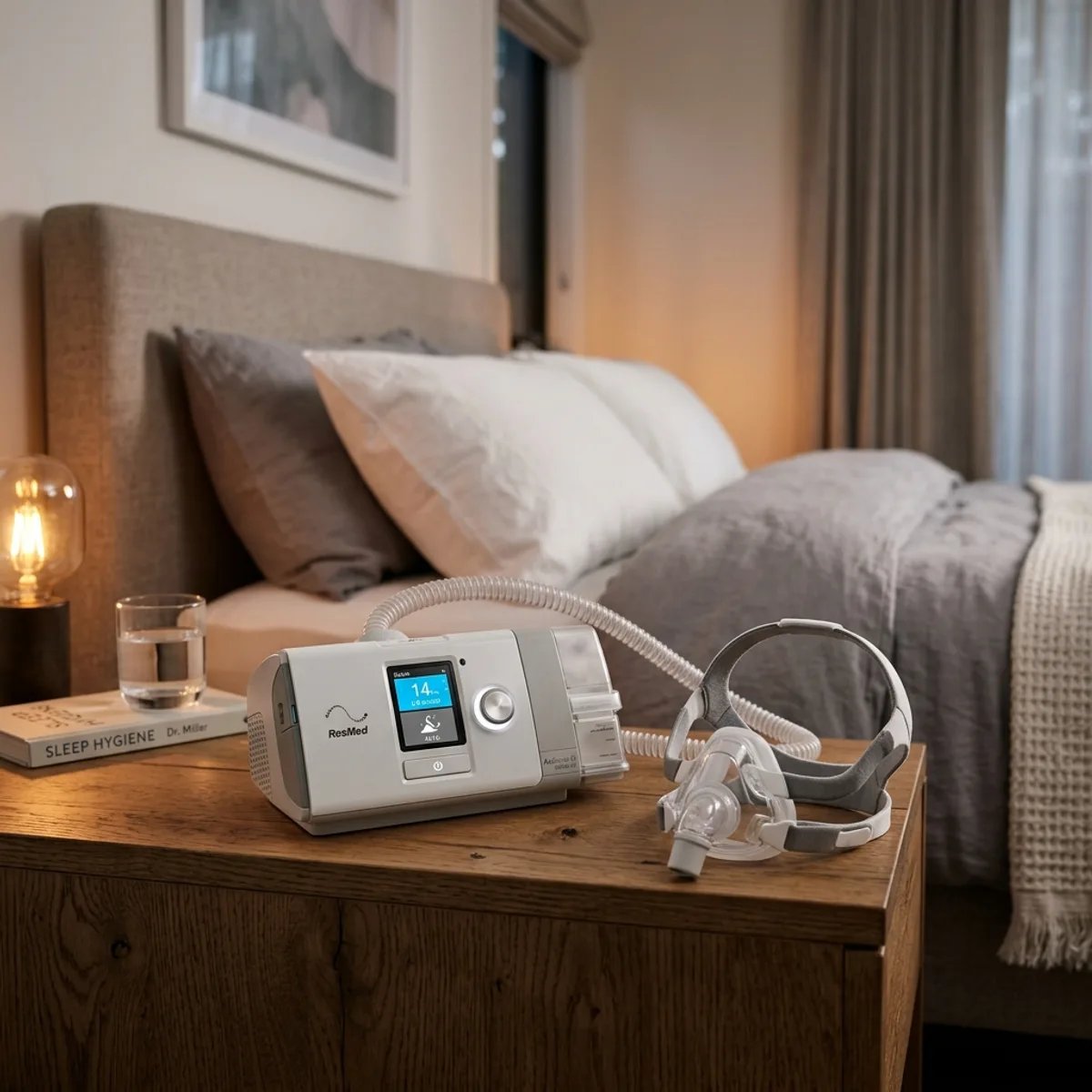
Evaluate your sleep symptoms during the night and day to identify potential airway obstruction:
Persistent snoring that disturbs your partner or can be heard through closed doors, often indicating airway resistance.
Moments during the night where you stop breathing for several seconds, followed by sudden gasps or choking sensations.
Waking up feeling exhausted despite sleeping normal hours, leading to severe daytime fatigue and lack of energy.
Waking up with a dull headache, dry throat, or sore mouth due to mouth breathing and low oxygen levels during the night.

Snoring and apnea are not simple habits; they are mechanical and dynamic problems involving the anatomy of the upper airway. During the consultation, Dr. Karla Sanz examines key areas: the nasal structure (deviated septum, allergic rhinitis, or swollen turbinates) that blocks airflow, the throat and palate (floppy soft palate, long uvula, or flaccid tissues), and the tongue base and tonsils that narrow the throat during sleep.
As a specialist with a subspecialty in Sleep Medicine and Rhinology, Dr. Karla Sanz combines both clinical views. While a sleep study (polysomnography) measures the severity and frequency of your apneas during the night, the physical exam in the office locates the exact site or sites where physical airway obstruction occurs.
This comprehensive evaluation allows us to guide you toward the correct treatment path (such as CPAP, mandibular advancement devices, or functional surgery) to achieve safe results and restore your quality of rest.
Transparent, ethical cost structure for your sleep health assessment
Comprehensive clinical evaluation of the ear, nose, throat, and upper airway. Includes your detailed medical history, physical examination, and initial treatment plan guidance.
From $1,300 MXN
The initial sleep evaluation consultation is priced from $1,300 MXN. The cost may vary depending on the type of evaluation. This appointment includes a detailed clinical history, physical ENT examination of the upper airway, and guidance on diagnostic options.
Sleep Studies: If obstructive sleep apnea is suspected, we will guide you on undergoing a sleep study (polysomnography or home respiratory polygraphy) with trusted external laboratories. The study is quoted and billed independently by the provider.
Devices & Treatments: The consultation does not include the cost of sleep studies, CPAP equipment, or mandibular advancement devices.
In-person Consultation Notice: The WhatsApp channel is strictly administrative for booking appointments and requesting cost information. For medical ethics and legal compliance, diagnoses or prescriptions are not provided remotely without an in-person evaluation.
Detailed evaluation of daytime symptoms (fatigue, sleepiness), nighttime habits, and partner reports.
Meticulous examination of the nose, palate, uvula, and tonsils to detect physical obstructions.
Defining whether you need a sleep study (polysomnography) and explaining how to undergo it.
Allergy management, sleep hygiene adjustments, weight control, or mandibular advancement devices.
Interpreting sleep studies (PSG/polygraphy) and guiding you through the setup and optimization of CPAP therapy.
Indicated for specific anatomical blockages (deviated septum, tonsil hypertrophy) or when CPAP is not tolerated.
Request your sleep evaluation via WhatsApp and share your symptoms.
In-office physical assessment of your nose, throat, and sleep habits by Dr. Karla Sanz.
Undergo a nocturnal sleep study at home or in a laboratory with trusted providers.
Establish the best treatment path (medical, CPAP, or surgery) based on study findings.
Follow up on your adaptation to treatment and ensure the restoration of healthy, restful sleep.
Otolaryngology & Sleep Medicine
Medical surgeon graduated from Universidad de Guadalajara, specialist certified by the Consejo Mexicano de Otorrinolaringología y Cirugía de Cabeza y Cuello, A. C.. Her clinical and surgical practice prioritizes responsible diagnosis, combining respiratory health and functionality with natural and balanced aesthetic results.
Patient reviews
Public reviews related to sleep and breathing care.
“Everything went very well! I highly recommend her for both surgery and consultation. My husband used to snore terribly; thanks to her, I am still married.”
Translated from the original Spanish review.
“Excellent care from Dr. Karla. I feel much better, I no longer snore, and I rest much better.”
Translated from the original Spanish review.
“A very good experience. The doctor was kind and warm from the start. She explained the diagnosis and treatment clearly and in great detail. You can tell she is passionate about medicine from the enthusiasm with which she explains everything. Highly recommended.”
Translated from the original Spanish review.
“The doctor was professional and empathetic at all times, and she explains things clearly and simply with examples you can understand. 100% recommended.”
Translated from the original Spanish review.
Dr. Karla Sanz works with all insurers, issues invoices, and completes insurance and reimbursement forms.
Coverage, authorization, and payment arrangements depend on the terms of your policy.
Some insurers, among others






Answers about the service and your in-person medical evaluation.
Last content review and update: June 2026. This information is for guidance purposes only and does not replace an in-person medical evaluation.
Select the symptoms you frequently experience while sleeping or during the day to obtain a preliminary recommendation:
Learn to differentiate common nighttime noise from a serious respiratory condition:
Noise produced by the passive vibration of the throat's soft tissues as air passes through. It does not interrupt breathing or fragment sleep.
Occurs when throat muscles relax so much that the airway physically collapses, stopping air flow for several seconds and causing drops in blood oxygen levels.
Schedule a consultation with Dr. Karla Sanz.