Tinnitus and ringing in the ear in Guadalajara

Learn to Quiet the Noise of Tinnitus and Reclaim Your Peace

Dr. Karla Sanz, Otolaryngologist and Sleep Medicine specialist, helps you break the cycle of stress and insomnia caused by tinnitus through a rigorous clinical diagnosis and a personalized habituation plan.

Ced. Prof. 9397120 Ced. Esp. 12326536 Certificación CONACEM SAL-3216/21
Medical consultation and diagnosis of tinnitus - Dr. Karla Sanz

What do you experience in your daily life?

Tinnitus is perceived uniquely by each person. Identifying its impact and characteristics is key to structuring a relief plan:

Persistent Ringing or Buzzing

Constant perception of whistling, hissing, or high-pitched tones that seem to originate in one or both ears, or in the head.

Insomnia & Nighttime Fatigue

The noise becomes more intolerable in the silence of the night, preventing falling asleep and leading to chronic fatigue.

Anxiety & Irritability

The constant presence of the sound keeps the body's alert system switched on, raising stress levels and hindering daily concentration.

Difficulty Understanding Speech

Although the ringing does not physically block hearing, the effort to filter out the noise fatigues the auditory system.

Dr. Karla Sanz, otolaryngologist and sleep specialist in Guadalajara

Tinnitus Requires Medical Evaluation and a Holistic Approach

Ringing in the ear is not a disease, but a symptom that something is occurring in the auditory pathway or in the brain's processing of sound. It is a very common condition, which in most cases is associated with prior hearing loss (even mild or hidden), but can also be modulated by tension in the neck muscles or jaw (temporomandibular joint - TMJ).

The sleep connection: Tinnitus is often perceived with greater intensity in the quiet of the night, disrupting rest. Dr. Karla Sanz's subspecialty in Sleep Medicine allows her to offer a unique integrative approach, diagnosing and treating the insomnia and anxiety that feed and amplify the discomfort of the ringing, helping you reclaim your nights of deep rest.

Through a rigorous clinical diagnosis in the office, we rule out serious organic causes and structure a personalized neurological habituation plan to retrain your brain.

Protocolos Médicos

How much does a tinnitus evaluation cost in Guadalajara?

Transparent cost structure for your otological diagnosis

Consulta de Valoración Especializada

Evaluación clínica integral de oído, nariz, garganta y vía respiratoria superior. Incluye tu historia clínica detallada, examen físico y la orientación del plan terapéutico inicial.

50-60 min
Consultorio presencial
Costo de Valoración

$1,000 MXN

Reservar Espacio

The specialized tinnitus evaluation consultation in Guadalajara is priced at $1,000 MXN. It includes a detailed balance/hearing clinical history, detailed otoscopy, and the initial design of habituation guidelines.

Complementary Hearing Studies: For an accurate diagnosis, a complete audiometry and speech audiometry are required. If you do not have them, we will refer you to highly trusted testing centers in Guadalajara (approximate external cost: $800 - $1,500 MXN).

Device Therapy: If your case requires hearing aids with integrated therapeutic noise generators, the cost varies depending on the device and is quoted separately directly with certified clinical audiologists.

Aviso de Consulta Presencial: El canal de WhatsApp es de carácter estrictamente administrativo para agendar y cotizar. Por ética médica y normatividad legal, no se realizan diagnósticos ni se prescriben tratamientos a distancia.

Steps of your tinnitus evaluation consultation

1

Medical Evaluation & Otoscopy

Physical check of the ear canal to rule out simple mechanical causes such as earwax plugs, infections, or jaw joint dysfunction.

2

Clinical Otological Diagnosis

Identification of triggers and red flags that require vascular imaging studies or magnetic resonance imaging (MRI).

3

Guided Hearing Study

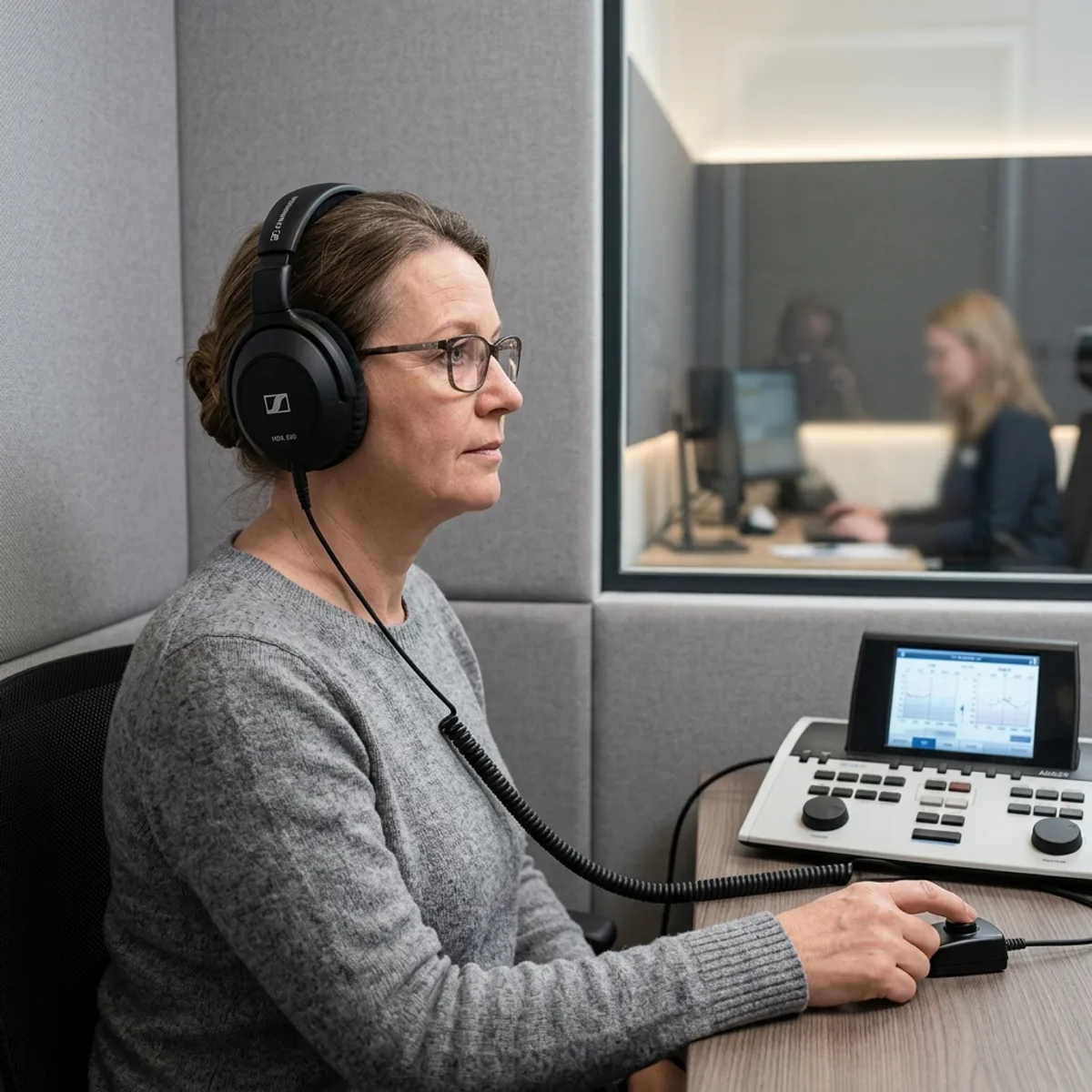
Coordination and analysis of high-definition pure-tone audiometry tests to map the health of the auditory nerve and rule out high-frequency loss.

4

Habituation Plan Design

Structuring specific sleep hygiene measures, sound therapy, and anxiety management tailored to your case.

Treatments and auditory habituation options

Neurological Habituation Plan

Clinical and behavioral strategies to retrain the brain to filter out the ringing passively, allowing you to stop consciously perceiving it in your daily life.

Sound Therapy

Therapeutic use of environmental white or broadband noise to reduce auditory contrast, facilitating brain desensitization and nighttime rest.

Hearing Aid Fitting

For patients with concomitant hearing loss. Environmental amplification naturally masks the ringing and relieves the brain's listening effort.

Sleep Hygiene & Sleep Medicine

Specialized behavioral medical management to break the vicious cycle of insomnia and sympathetic stress, decreasing central sensitivity to tinnitus.

The care process for your habituation

1

Schedule Consultation

Request your appointment and share if your ringing is on one side only or if it beats with your heart.

2

Office Examination

Otoscopy and clinical history to rule out earwax, TMJ dysfunction, or mechanical problems.

3

Clinical Studies

Audiometry/tinnitus analysis is recommended if necessary to map the actual status of your auditory nerve.

4

Relief Strategies

The personalized plan for habituation, sound therapy, and sleep hygiene is initiated.

5

Follow-up

We evaluate your response and adjust guidelines to ensure long-term habituation.

Dra. Karla Sanz
Especialista Certificada

Dra. Karla Sanz

Otorrinolaringóloga y Cirujana de Cabeza y Cuello

Médica cirujana egresada de la Universidad de Guadalajara, especialista certificada por el Certificada por el Consejo Mexicano de Otorrinolaringología y Cirugía de Cabeza y Cuello. Su práctica clínica y quirúrgica prioriza el diagnóstico responsable, combinando la salud y funcionalidad respiratoria con resultados estéticos naturales y equilibrados.

Céd. Prof. 9397120 Céd. Esp. 12326536 Certificación SAL-3216/21

Frequently asked questions about tinnitus

Respuestas y aclaraciones sobre tu cirugía de nariz y valoración clínica.

Does tinnitus have a definitive cure?
Chronic primary tinnitus of auditory origin does not have a generalized physical cure that instantly eliminates it 100%. However, through sound therapy and medical counseling, 'neurological habituation' is achieved: the brain learns to classify the ringing as a neutral and irrelevant noise, ceasing to consciously perceive it in your day-to-day life, which is equivalent to eliminating the discomfort and restoring your quality of life.
Does Ginkgo Biloba or vitamin supplements remove the ringing?
No. International clinical guidelines (such as those from the American Academy of Otolaryngology-Head and Neck Surgery - AAO-HNS) strongly advise against the use of Ginkgo Biloba, zinc, melatonin, or other homeopathic complexes to treat tinnitus. Controlled scientific studies have demonstrated that they are no more effective than a placebo and represent an unnecessary financial expense for the patient.
Will ringing in the ear make me deaf?
No, the ringing itself does not cause deafness. However, tinnitus is very often a secondary consequence or warning sign of a prior hearing loss (even mild or hidden in high frequencies). For this reason, it is essential to perform a complete pure-tone audiometry to determine the actual state of your hearing and protect your ears.
How does Sleep Medicine help treat my tinnitus?
The ringing is perceived with greater intensity in the quiet of the night, which triggers insomnia and elevates anxiety. Sleep deprivation keeps the sympathetic nervous system in a state of hyperalertness, which increases the brain's sensitivity to tinnitus. By regulating your rest and sleep hygiene through Sleep Medicine guidelines, we lower brain alertness and drastically decrease the distress caused by the ringing during the day.
What is pulsatile tinnitus and why does it require different care?
Pulsatile tinnitus is heard as a rhythmic beating that coincides exactly with your heartbeat. Unlike common ringing, pulsatile tinnitus usually originates from turbulent blood flow in vessels near the ear. It requires a meticulous medical evaluation and specialized vascular imaging studies (such as CT Angiography or MR Angiography) as a priority to rule out arterial malformations or narrowings.

Última revisión y actualización de contenido: Junio 2026. Esta información tiene fines únicamente orientativos y no sustituye la valoración médica presencial.

When does ringing in the ear require priority or urgent attention?

Although the vast majority of tinnitus cases are harmless and associated with fatigue or mild hearing wear, you should schedule an appointment immediately or go to the emergency room if you experience any of the following scenarios:

  • The ringing is on one side only (unilateral tinnitus) and has appeared recently.
  • The tinnitus is pulsatile (you hear the ringing beating at the exact same rhythm as your heart).
  • It appeared suddenly along with severe hearing loss (sudden sensorineural hearing loss within 72 hours).
  • It is accompanied by rotational vertigo, severe instability when walking, or facial weakness/paralysis.

Ear, nose, or throat discomfort?

Schedule a consultation with Dr. Karla Sanz.