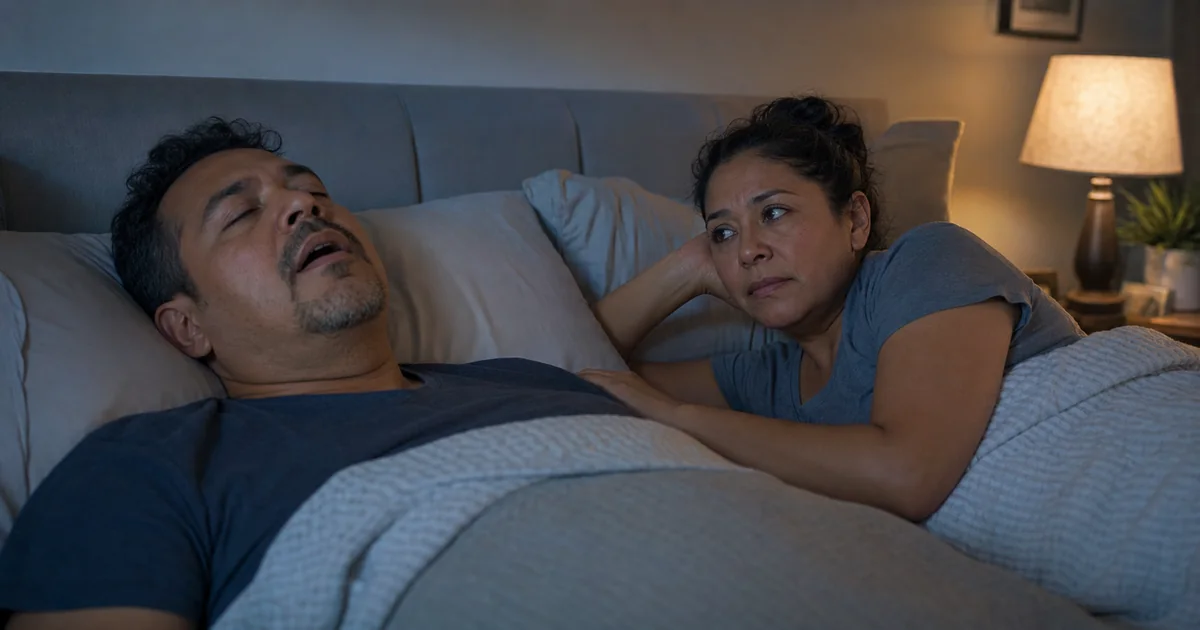
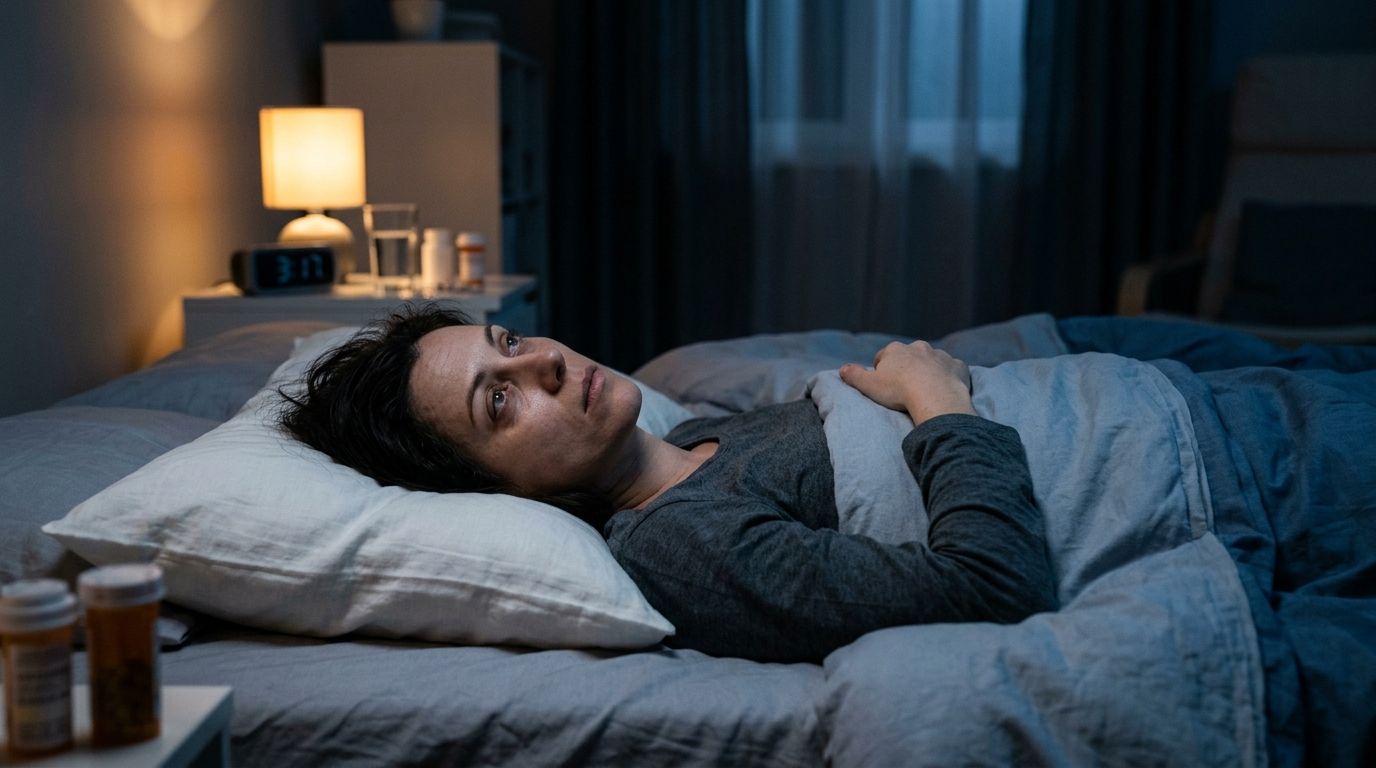
Snoring can seem like a normal thing especially when it happens every night. But when the snoring is loud and you still wake up exhausted, with daytime sleepiness or morning headaches, there may be a sleep-breathing problem worth investigating.
One of the most common disorders is Obstructive Sleep Apnea (OSA) a condition in which breathing repeatedly stops during sleep due to partial or complete closure of the airway.
The good news is that simplified, comfortable home sleep studies now exist that can identify whether these disruptions are occurring and how significant they are.
When Does Snoring Stop Being “Just Snoring”?
Pay close attention if you experience several of the following:
- You snore loudly almost every night.
- Your partner has noticed you stop breathing while you sleep.
- You wake up suddenly feeling short of breath or choking.
- You wake up with a very dry mouth.
- You have a headache when you wake up.
- You sleep enough hours but still feel tired.
- You feel sleepy or struggle to stay awake during the day.
- You have difficulty concentrating or memory problems.
- You wake up multiple times during the night.
- You have high blood pressure that is difficult to control.
- You sleep many hours but still feel unrested.
Waking up tired every morning should not be considered normal.
What Happens During Sleep Apnea?
During an apnea event, the airway temporarily closes and airflow decreases or stops completely.
The body detects that something is wrong and triggers brief arousals to restore breathing. These arousals are often so short the person has no memory of them the next morning.
The problem is that they can happen dozens or even hundreds of times in a single night. As a result, sleep loses its continuity and the body may experience repeated drops in oxygen levels and changes in heart rate.
This is why someone can think: “I slept 8 hours but feel like I did not sleep at all.”
Do I Have to Go to a Sleep Lab?
Not always.
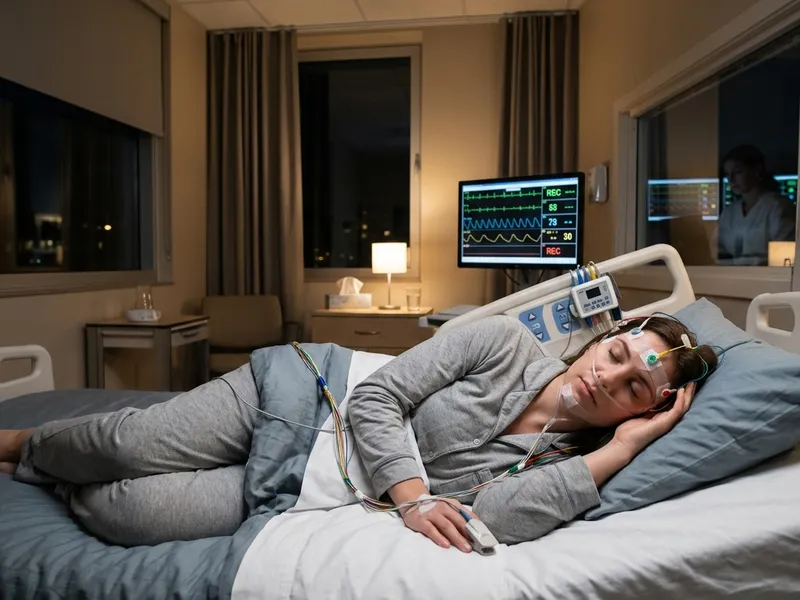
Simplified sleep studies also known as home sleep tests or respiratory polygraphy can evaluate specific breathing parameters overnight.
Depending on the study and equipment used, measurements may include:
- Airflow.
- Respiratory effort.
- Oxygen saturation.
- Heart rate.
- Body position.
- Snoring.
The patient wears the device at home and sleeps in their usual environment. This has an important advantage: you do not need to change your sleep routine to get useful information about what happens during the night.
Can a Simplified Study Detect Sleep Apnea?
In appropriately selected patients, yes.
The data collected allows calculation of respiratory indices that help determine whether events consistent with OSA are occurring and how severe they are.
However, not every patient is an ideal candidate for a home sleep test. In some cases, a more comprehensive evaluation or a full polysomnography may be needed especially when symptoms are complex, other medical conditions are present, another sleep disorder is suspected, or when the home study result does not fully explain the symptoms.
This is why a sleep study should never be interpreted in isolation. The correct diagnosis starts with a proper medical evaluation and is completed with the sleep study best suited for each patient.
Why Is It Important to Diagnose This Before Complications Appear?
Obstructive Sleep Apnea does not only affect sleep quality. When left undiagnosed and untreated for a long time, it may be associated with various health problems, including:
- High blood pressure.
- Cardiovascular disorders.
- Increased risk of accidents related to sleepiness.
- Metabolic alterations.
- Concentration and memory problems.
- Mood changes.
- Significant reduction in quality of life.
Fragmented sleep can also impact work, academic, and family performance.
There is no need to wait for a complication to appear before investigating the cause of fatigue. The best time to study a possible sleep-breathing disorder is when there are already signs suggesting something is not working correctly.
“But I Just Snore”
This is one of the most common misconceptions.
Snoring can be simply a sound produced by the vibration of airway tissues. But it can also be a sign that the airway is narrowing too much during sleep.
The difference cannot always be determined just by listening to the snoring. A sleep study moves from suspicion to objective data and that completely changes how a patient is managed.
What Happens After the Study?
The goal is not simply to know whether you have sleep apnea. The goal is to understand what is happening and choose the right treatment.
Depending on the results, airway anatomy, symptoms, and individual patient characteristics, treatment may include several strategies:
- Measures to improve sleep habits.
- Control of factors that contribute to airway collapse.
- Mandibular advancement devices in selected patients.
- Continuous positive airway pressure (CPAP).
- Treatment of nasal conditions that impair breathing.
- Surgical treatment in carefully selected patients.
- Combinations of different treatments.
There is no single treatment for all people with sleep apnea. That is why making the correct diagnosis first is so important.
What If the Study Comes Back Normal?
That is also valuable information.
If the study shows no significant apnea but you continue waking up tired, other possible causes of non-restorative sleep may need to be evaluated.
In other words, getting a sleep study does not mean assuming you have apnea. It means looking for an objective explanation for your symptoms.
Snoring Should Not Be Your Every-Night Alarm
If you snore occasionally after a particularly exhausting day, it is probably not cause for concern.
But if you snore loudly, night after night, and also wake up tired, it is worth pausing to ask what is happening during those hours when you are supposedly resting.
Sleeping well means breathing properly, maintaining restorative sleep, and waking up with the energy to start the day.
If you suspect that you or your partner may have sleep apnea, a medical evaluation and a sleep study can help detect it before complications arise and before years of non-restorative sleep become something you simply learned to live with.
Do you snore loudly? Do you wake up tired? Do not normalize it. Investigate it.
Scientific References
- Kapur VK, Auckley DH, Chowdhuri S, Kuhlmann DC, Mehra R, Ramar K, et al. Clinical Practice Guideline for Diagnostic Testing for Adult Obstructive Sleep Apnea. J Clin Sleep Med. 2017;13(3):479-504. doi:10.5664/jcsm.6506. PMID: 28162150
- Epstein LJ, Kristo D, Strollo PJ Jr, et al. Clinical guideline for the evaluation, management and long-term care of obstructive sleep apnea in adults. J Clin Sleep Med. 2009;5(3):263-276. PMID: 19960649
- Peppard PE, Young T, Barnet JH, Palta M, Hagen EW, Hla KM. Increased prevalence of sleep-disordered breathing in adults. Am J Epidemiol. 2013;177(9):1006-1014. doi:10.1093/aje/kws342. PMID: 23589584

Dr. Karla Sanz
Otolaryngology & Head and Neck Surgery Specialist
Board-certified specialist in the prevention, medical diagnosis, and surgical treatment of ear, nose, throat, and head and neck conditions in Guadalajara and Zapopan.